 SmartHarmony AI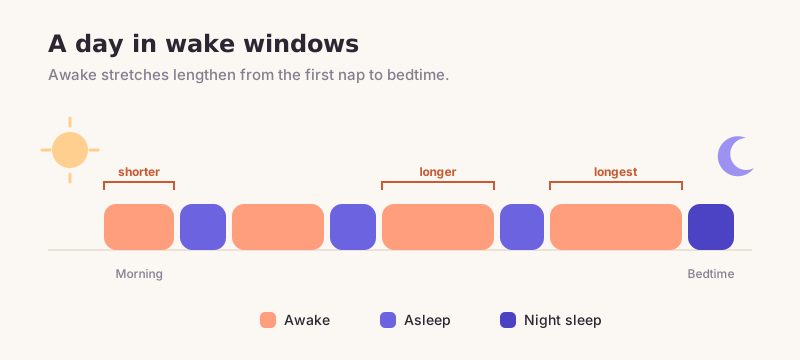
- A wake window is how long your baby can comfortably stay awake before tipping into overtired.
- Overtired babies release more cortisol and adrenaline, which makes settling harder, not easier.
- Watch your baby's cues, not just the clock — start the wind-down at the early signs.
- Windows lengthen with age in fits and starts. Trust the trend, not a specific number.
What a wake window is
A wake window is simply the stretch of time your baby can comfortably stay awake between sleeps before tipping into overtired. It's not a rule handed down from on high — it's a description of your baby's tolerance for being awake, which is genuinely short at the start and lengthens as their nervous system matures.
Think of it as a battery. Your baby wakes with a certain charge; feeding, playing, and taking in the world all draw it down. The window is the span where the battery is in its happy range — not so full they can't settle, not so empty they're running on stress hormones. Your job isn't to force sleep at a set time; it's to notice when that happy range is closing and offer sleep before it slams shut.
Why timing matters so much
The reason it matters is a quirk of infant physiology: an overtired baby produces more cortisol and adrenaline, which makes falling asleep harder, not easier. Catch the window and settling is calm; miss it and you're often soothing a wired, upset baby. So the whole game is timing the wind-down to land before that tip-over point.
The other side is just as real. Put a baby down too early — before they've built up enough sleep pressure — and they'll simply lie there, chat, or fuss, then take a short, unsatisfying nap. Good sleep lives in a sweet spot between undertired and overtired, and the window is your map to it.
Reading your baby's tired cues
Rather than watching the clock alone, learn your baby's personal "I'm getting tired" signals. They usually arrive in a rough order — early, subtle cues first, then louder ones:
- Early: staring into the distance, going quiet, losing interest in a toy or face, slower movements.
- Building: yawning, rubbing eyes or ears, pulling at hair, red eyebrows, clumsy or jerky movements.
- Late (already overtired): arching, frantic activity, hiccuppy or inconsolable crying, fighting the settle.
The sweet spot is starting your wind-down at the early cues. If you only notice the late ones, that's useful information for next time — shorten the window a little.
Published age ranges are a helpful starting point, but your baby hasn't read them. Use timing to know roughly when to start watching for cues — then let the cues make the call.
How windows change as they grow
The single most reliable fact about wake windows is that they get longer with age. Newborns tolerate only a very short stretch awake — often just long enough for a feed and a diaper change — while an older baby can happily play for a good while. The lengthening isn't smooth or scheduled; it happens in fits and starts, often around developmental leaps, and it varies a lot from baby to baby.
Two practical consequences follow. First, the window that worked last month will eventually feel too short — you'll see fought naps and long settles because your baby now needs more awake time. Second, the first window of the day is usually the shortest, and the last one before bed is often a touch longer (see Figure 1). Trust the trend, not a specific number, and re-check every few weeks.
Turning cues into a rhythm
Once you've watched for a few days, patterns emerge: your baby tends to fade after a certain amount of awake time, in a certain order of cues. That's your rhythm. Aim to begin winding down a few minutes before you expect the early cues, so the calm has time to work — a dim room, a quieter voice, and fewer stimulating toys as the window closes.

Logging sleeps teaches the app your baby's actual windows. It then quietly suggests when the next one is likely to open — a gentle heads-up so you can start the wind-down before the meltdown, not after. The prediction is rules-based and tuned to your own data, never a guess.
Want a quick starting point? Try our free baby wake windows calculator — pick an age and enter the last wake-up time to see when the next nap is likely.
When it goes sideways
Two things commonly throw windows off:
- Undertired: too little awake time and your baby simply isn't ready to sleep — you'll get a long, fussy settle or a very short nap that ends far too soon.
- Overtired: too much awake time and they're wired — expect a hard settle, a short nap, and often an early-morning wake the next day.
If a nap goes badly, glance at the window that preceded it. Nudging it 10–15 minutes in the right direction next time is usually all it takes. Change one thing at a time and give it a few days before judging — one-off bad naps happen to everyone.
Common questions
My baby yawns constantly — are they always tired? Some babies yawn a lot; use the whole cluster of cues plus timing rather than any single sign.
Should I wake a napping baby to protect the window? Often a long nap is fine, but if late or very long naps repeatedly push bedtime too late or wreck night sleep, gently capping them can help. This is a good thing to raise with your healthcare professional if you're unsure.
What if the cues and the clock disagree? Follow the cues. The clock is there to tell you roughly when to start looking.
General guidance, for information only — not a substitute for professional medical advice. When in doubt, contact your healthcare professional.