 SmartHarmony AI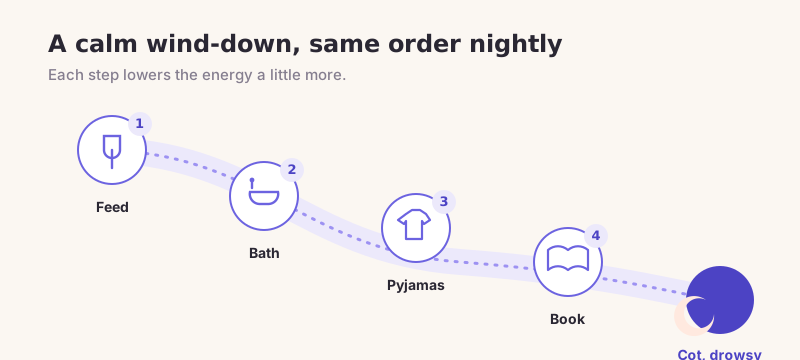
- Babies can't tell time, but they're brilliant at spotting patterns — a routine is the signal.
- Short (20–40 min), calm, and the same order every night beats long and elaborate.
- Move the feed earlier over time so feeding-to-sleep doesn't become the only tool.
- On hard nights, shrink the routine rather than skip it — even two familiar steps carry the message.
Why a routine works
Babies can't tell time, but they're brilliant at spotting patterns. Long before they understand a single word, they are reading the world for what tends to come next — a feed after a nap, a face over the cot, the sound of the bath running. A short, predictable series of steps in the same order each night becomes one of those patterns: a little "sleep is coming" flag their brain learns to recognise. You are not tricking them into sleep so much as giving their nervous system a familiar runway to land on.
The reason this is so powerful is that it works with your baby's biology rather than against it. A calm, repeated sequence gently lowers arousal — heart rate, muscle tension, and the buzz of the day all ease down — while the fading light and quieter voices support the body's own drift toward sleep. Over days and weeks the routine itself starts to do some of the settling work for you, so you're leaning on the pattern rather than on rocking or feeding alone. That matters later: the more the falling-asleep job is shared across a familiar routine, the less any single prop has to carry the whole thing.
A simple sequence that fits any family
There's no magic list, and no order you must copy exactly. What matters is that the sequence is calm, short, and the same every night — the specific steps are yours to choose around your home, your baby, and what you can realistically repeat when you're tired. A routine you can actually keep is worth far more than an ideal one you manage twice a week. A common, flexible shape looks like this:
- A feed — moved earlier in the routine as your baby grows, so feeding-to-sleep doesn't quietly become the only way down.
- A bath or a warm wash — a natural signal in its own right, and the gentle cool-down afterward nudges the body toward sleep.
- Into pyjamas and a sleep sack, done unhurriedly and in the same spot each night.
- A book or a quiet song in a dim room, voices low and movements slow.
- Into the cot drowsy, in a dark and calm space, with the same few words each time.
Notice how each step is quieter and dimmer than the one before it — that descent is the point. The early steps can be a little more social and warm; by the last one or two, you want the room almost boring. Moving the feed toward the front of the sequence over the first months is a small, deliberate choice with a big payoff: it keeps feeding as a lovely part of bedtime without letting it become the single thing that puts your baby to sleep, which is what makes the small hours easier down the line.
Bedtime is not the moment for tickles, screens, or an exciting new game. The goal is a gentle downshift, so lower the lights, slow your voice, and let the energy drain out of the room. If a step reliably winds your baby up rather than down, that's your cue to move it earlier or drop it — the routine should always trend calmer as it goes.
Setting the scene
The environment does a lot of quiet work, and it's the part of bedtime you have the most direct control over. A dark room supports the body's own melatonin, the hormone that helps sleep arrive; even dim light in the evening can hold it back, so blackout blinds and low, warm lamps during the wind-down often help more than parents expect. A comfortable, not-too-warm temperature matters too — babies settle and stay asleep more easily when they're not overheating — and some families find a steady, low white noise smooths over the unpredictable clatter of a household so it doesn't jolt a lightly sleeping baby awake.
Beyond those levers, the strongest move is to keep the sleep space itself bare and simple. A plain, uncluttered cot signals nothing to play with and nothing to climb toward — it is a place for sleep and only sleep, which reinforces the whole message of the routine. The setup matters more than any single trick or gadget, and the same calm scene, recreated the same way each night, becomes part of the pattern your baby is learning to trust. For exactly what belongs in the cot and what should stay out of it, see our safe-sleep guide.
Getting the timing right
Even a lovely routine falls flat if the timing is off. Start too late, when your baby is already overtired, and you're not winding them down so much as trying to talk a wired, stress-charged little body into sleep — a much harder job, because an overtired baby is running on the very hormones that keep sleep away. Start too early, before any sleep pressure has built, and you get a baby who simply isn't ready: they chat, wriggle, and fuss through a routine that can't land. The sweet spot is narrow, and finding it is most of the battle.
The practical fix is to line the routine up with the end of the last wake window of the day, so you're finishing the sequence just as the natural sleepy cues arrive rather than chasing them. Work backwards: if the wind-down takes twenty to forty minutes, begin it that far ahead of the moment you'd expect your baby to be ready. If bedtime has drifted late and mornings have turned rough, don't leap to a big change — nudge the whole routine about fifteen minutes earlier for a few nights and watch what happens before adjusting again.
Counter-intuitively, a slightly earlier bedtime frequently produces an easier settle and a longer night than a late one — because you've caught the window before the overtired hormones surge. If evenings are a battle, experiment with earlier before later, and give any single change a few nights before you judge it.
Consistency over complexity
Consistency is the active ingredient — more than the length of the routine, the products you use, or how lovely it looks. A four-step routine done the same way every night beats a ten-step one you can only manage sometimes, because it's the repetition that turns a sequence into a signal. Each predictable night reinforces the pattern; each wildly different one blurs it. This is also why elaborate routines tend to backfire: the more moving parts, the more likely they are to collapse on a busy or exhausting evening, and an inconsistent routine teaches your baby much less than a plain one kept faithfully.
Because the signal lives in the sameness, share the exact sequence with everyone who does bedtime — a co-parent, a grandparent, a sitter — so it stays recognisable whoever is on duty. Writing the steps down, or logging them so the next caregiver can see the usual shape, keeps the handover clean. And on the hard nights that come to every family — travel, illness, a late day out — shrink the routine rather than skip it. Even two familiar steps, a quick wash and the same book in the same dim room, carry the message that sleep is coming.
Adapting as they grow
A good routine isn't fixed forever — it grows with your child while keeping the same bones. As a baby becomes a toddler, the sequence can gain a little richness: a book they choose, brushing new teeth, a short chat about the day, a favourite soft toy tucked in. The through-line is that it still descends toward calm and still happens in the same order, so the underlying signal your child has trusted for months stays intact even as the details mature.
Older children especially thrive on the predictability, and on the small choices a routine can offer. Letting a toddler pick between two books or which pyjamas to wear ("this one or that one?") gives them a sense of control at exactly the moment they're most inclined to test it, which heads off a surprising amount of stalling and negotiation. Keep the choices small and the frame firm — the choice is which book, not whether it's bedtime — and the routine keeps doing its quiet work for years.
General guidance, for information only — not a substitute for professional medical advice. When in doubt, contact your healthcare professional.