 SmartHarmony AI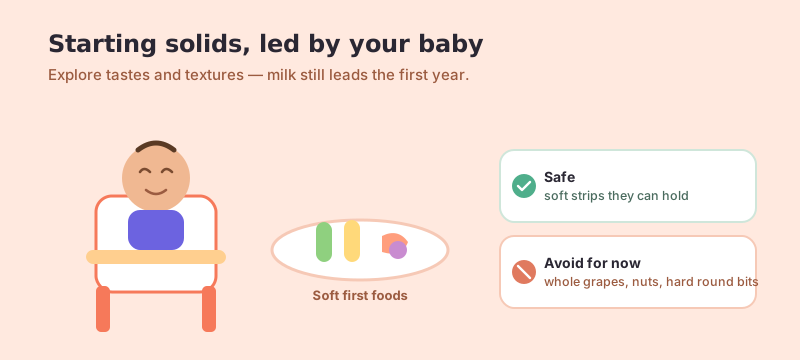
- Readiness is about development — head control, sitting with support, real interest — not just the calendar.
- Purées, soft finger foods, or a mix are all valid; what matters is variety and a calm pace.
- Milk still leads the first year; solids are added alongside, not instead of it.
- Gagging is a normal, protective reflex and is different from choking.
Signs of readiness
Readiness is about development, not just the calendar. It's tempting to circle a date and treat it as a starting gun, but a baby's body and nervous system have to be ready to manage food before any date will matter. The signs usually looked for tend to arrive together, around the middle of the first year, and they're easier to spot than a number on the calendar once you know what you're watching for.
- Good head and neck control — able to hold the head steady and upright without support.
- Able to sit up with support and stay steady, so the airway stays in a safe, upright position.
- Genuine interest in food — watching you eat, reaching for what's on your plate, opening up when a spoon comes near.
- Losing the reflex that pushes food straight back out with the tongue.
Take these signs as a cluster rather than a checklist to race through. A baby who still tongue-pushes food straight back out, or who can't yet stay steady when propped, may simply need another week or two — that's not a delay, just a slightly different pace. Age ranges are a rough guide to when to start looking; the developmental signs are the real test. Because timing can depend on your baby's own history and any health considerations, it's worth confirming when to begin with your healthcare professional rather than working purely from a chart.
First foods and textures
There's more than one good approach, and none of them is the single "correct" way. Smooth purées fed from a spoon, soft finger foods your baby picks up themselves, or a relaxed mix of both can all work well. What they share matters more than how they differ: start simple, introduce a variety of tastes and textures over the following weeks, and offer new foods when your baby is calm and alert — not overly hungry, not tired, and not at the tail end of a long day. Early solids are about exploring, so small amounts, squished food, and a genuinely messy tray are exactly what success looks like at this stage.
Aim to include iron-rich foods among the early options, since a baby's own iron stores gradually need topping up as the first year goes on. Beyond that, breadth is the goal — offering many different flavours and textures over time helps your baby get comfortable with the idea that food comes in endless forms. Don't be discouraged when a food is turned down; refusal is ordinary and usually temporary. It can take many separate, low-pressure exposures before a baby accepts a new taste, so a rejected vegetable today is simply a food to offer again another day, calmly and without a fuss.
Milk still leads the first year
It's an easy thing to forget once the spoons and bibs come out, but throughout the first year breast milk or formula still provides most of your baby's nutrition. Solids are added alongside milk, not in place of it, and that framing quietly removes a lot of pressure. You're not trying to hit calorie or portion targets meal by meal; you're helping your baby learn a brand-new skill — how to move food around the mouth, taste it, and swallow it — while their milk feeds keep doing the nutritional heavy lifting.
A common and comfortable early rhythm is to offer milk first, then a small taste of solids a little later, so a hungry baby isn't asked to wrestle with an unfamiliar spoon on an empty stomach. As the months pass and eating becomes more confident, the balance gradually shifts and solids take on a larger share — but that shift happens on its own timeline, not to a fixed schedule. If you're ever unsure how milk feeds and solids should fit together for your baby in particular, that's a good question to bring to your healthcare professional.
Allergens and checking in
Current guidance generally leans toward introducing common allergen foods early rather than holding them back, and then offering them regularly once they've been introduced. The practical approach many families use is to offer one new allergen food at a time, in a small amount, so you can watch calmly how your baby responds before moving on to the next. Introducing them when you're unhurried and paying attention — rather than in the middle of a busy, distracted meal — makes it easier to notice how each new food is received.
Timing, which foods to start with, and how to pace them can depend a great deal on your own baby and your family's history, so this is a genuinely good moment to check in with your healthcare professional before you begin — especially if there's a family history of allergies, eczema, or asthma. That conversation is about getting a plan that fits your baby, not about alarm. Your healthcare professional can advise on the right timing and the right first foods for your circumstances, and can tell you what to do and who to contact if anything about a reaction ever concerns you.
Gagging is a normal, protective reflex as babies learn to move food around their mouth — it can look and sound dramatic, but it's the body working exactly as intended. Quiet choking is different and is rare when foods are prepared appropriately. Always supervise meals, sit your baby upright, and keep small, hard, round foods (whole nuts, whole grapes, hard raw vegetables, popcorn, chunks of hard fruit) off the menu for now. Consider learning infant first aid so you feel prepared and confident.
Gagging, choking, and safety
Most of what keeps early meals safe is about the setup, and it's simple to get right. Set your baby up to succeed: upright in a stable high chair, never eating while reclined, moving, being carried, or distracted, and always with an attentive adult right beside them for the whole meal. An upright position keeps the airway in a safe line and lets your baby use gravity and their own developing coordination to manage food, rather than fighting against a slumped or leaning posture.
Prepare foods in shapes your baby can actually handle. Offer soft strips they can hold and gum, or well-mashed and soft textures, and avoid the small, hard, round shapes that are easy to swallow whole. Let your baby feed at their own speed rather than loading spoon after spoon — pausing between mouthfuls is part of how they learn to pace themselves safely. Knowing the difference between ordinary gagging and genuine choking, and having learned basic infant first aid ahead of time, means that if something ever does worry you, you'll feel readier to respond calmly.
Keeping mealtimes calm
The emotional tone of a meal shapes how a baby comes to feel about food, often more than any single thing on the tray. Follow your baby's pace, let them touch, squash, smear, and explore what's in front of them, and end the meal when they show you they're done — turning the head away, clamping the mouth shut, batting the spoon aside, or simply losing interest. Those signals are your baby communicating fullness, and honouring them teaches that they can trust their own appetite.
Pressure and mealtime battles tend to backfire, turning a neutral food into one your baby braces against. A relaxed, curious, low-stakes atmosphere does the opposite: it builds a healthy, unanxious relationship with food that lasts far beyond these first spoonfuls. Eating together when you can — letting your baby watch you enjoy the same kinds of foods, at the same table — is one of the best and most natural teachers there is, and it takes the spotlight off your baby's plate at exactly the moment that helps most.
General guidance, for information only — not a substitute for professional medical advice. When in doubt, contact your healthcare professional.