 SmartHarmony AI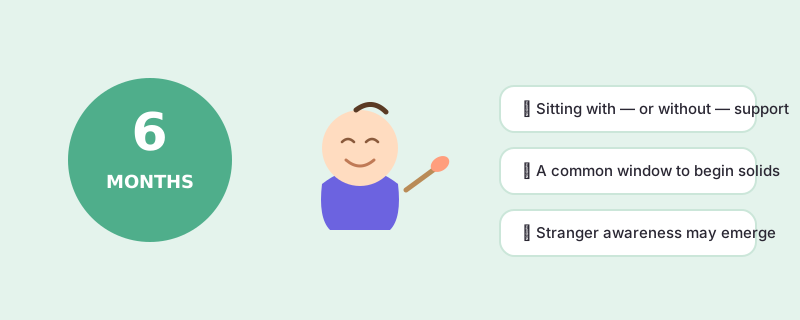
- Milestones
- Sitting with (or without) support; a common window to begin solids.
- Feeding
- Explore tastes and textures; milk still leads nutrition through the first year.
- Social
- Stranger awareness may emerge — a healthy sign of attachment, not a problem to fix.
A big month
Six months tends to be a milestone-rich stretch, and it often feels like it. Many babies are now sitting with support — and some without — freeing their hands to reach, rake, and pass objects from one to the other. You may notice more deliberate grabbing, mouthing of almost everything within reach, and a new determination to get to whatever has caught their eye. None of this arrives on a fixed timetable; babies assemble these skills in their own order and at their own pace, and a baby who is a little ahead on one is often a little behind on another. The trend over weeks matters far more than any single day.
Half a year of getting to know each other quietly pays off, too. Your baby is usually more interactive, more expressive, and easier to read: clearer signals for hunger, tiredness, play, and comfort. That growing legibility is what makes the coming months of solids and routines smoother — you are learning each other's language. It is also a natural moment to check in with your healthcare professional at a routine visit, both to celebrate progress and to raise any questions about growth, movement, or feeding readiness rather than guessing on your own.
Feeding
For many families this is the month solids begin, once the readiness signs come together — steady head control, the ability to sit with support, interest in what you're eating, and the fading of the early tongue-thrust reflex that pushes food back out. Think of first foods as exploration rather than nutrition: milk (breast or formula) still provides most of what your baby needs through the first year, and early tastes sit alongside milk rather than replacing it. Start small and unhurried — a little smooth or soft food once a day, offered when your baby is calm and not overtired, and let them set the pace. Mess is not a setback; it is how babies learn to handle food, so a wiped-down high chair and a relaxed attitude go a long way.
Offer variety over time — different tastes and textures, including iron-rich options, which become more important as the body's early iron stores draw down. Introduce foods one at a time over a few days when it's practical, so anything that doesn't agree is easier to spot, and keep offering foods that are refused; acceptance often takes many gentle exposures, not one. If your family has a history of food allergies, or you have any concerns about how to introduce common allergens, that is a conversation to have with your healthcare professional before you start rather than a decision to make alone. Our full guide on starting solids covers readiness signs, first foods, allergen introduction, and safety in more depth.
Development & social
Around now, many babies begin to show stranger awareness — a wariness of unfamiliar faces, sometimes with clinging or upset when a familiar caregiver steps away. This can feel like a step backward, especially for grandparents and friends, but it is a healthy sign of attachment rather than a problem to fix: your baby now knows exactly who their trusted people are. The kind response is patient rather than forced — let new people approach slowly, keep your baby close when they're uncertain, and give reassurance instead of pushing them to "be friendly." It tends to ease with time and familiarity.
Communication is blossoming, too. Babble usually gets richer and more varied, with strings of consonant sounds and playful experimentation with volume and tone. Many babies begin to respond to their own name, turn toward familiar voices, and show clear anticipation of everyday routines — the bath, the feed, the walk. Talking through your day, naming what you see, and pausing to let your baby "reply" all feed this back-and-forth. As always, ranges are wide; if you ever feel unsure about your baby's hearing, responsiveness, or development, your healthcare professional is the right person to ask.
Gagging as your baby learns to eat is normal and different from quiet choking; always supervise meals, seat your baby upright, and keep small, hard, round foods away.
General guidance, for information only — not a substitute for professional medical advice. When in doubt, contact your healthcare professional.