 SmartHarmony AI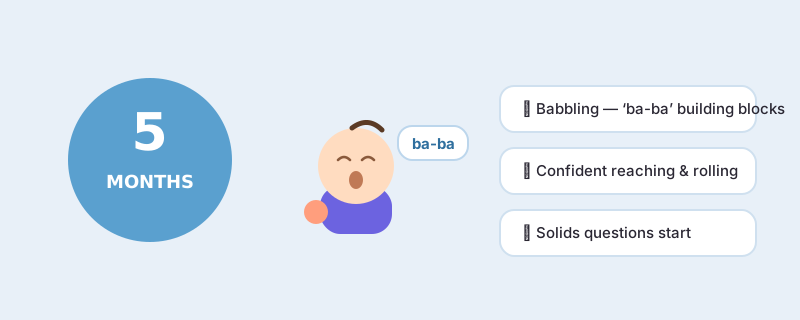
- Development
- Babbling, confident reaching and rolling; busy, curious, and increasingly vocal.
- Feeding
- Solids questions arise — the readiness signs usually line up a little later.
- Language
- Reading and narrating your day bathes your baby in the words they'll use later.
Development
Five-month-olds are typically busy, curious, and wonderfully vocal. Babbling starts to sound deliberate — repeated syllables like "ba-ba" or "da-da" that are the raw building blocks of first words, even though your baby doesn't yet attach meaning to them. Physically, the reaching and grabbing that emerged last month becomes noticeably more confident and accurate. Many babies can now grasp a toy, shake it, and pass it from one hand to the other, and mouthing everything remains their favourite way to figure out what a thing is.
Rolling often becomes more reliable around now, and some babies begin to sit when propped or held with a steadying hand, wobbling as they build the trunk strength to stay upright. As always, the timing varies widely from baby to baby — some are early sitters, others put their energy into rolling and reaching first — and none of that order predicts anything about how things unfold later. Keep the space around your baby safe as they get more mobile, and if you ever have questions about how your baby is moving, seeing, or responding, your healthcare professional is the right person to ask.
Feeding
Around five months, many parents start wondering whether it's time for solids — often because a baby watches every mouthful at the family table with obvious interest. That interest is lovely, but on its own it isn't the same as being ready. The readiness signs usually looked for — sitting with good head and neck control, bringing objects to the mouth reliably, and losing the reflex that pushes food back out — tend to line up a little later, commonly closer to six months. Going purely by age or by mealtime staring can lead to starting before your baby is truly set up to manage food safely.
Because timing and first foods matter, this is a good moment to check in with your healthcare professional rather than deciding by the calendar alone — especially around any family history of allergies or specific feeding questions. In the meantime, milk feeds remain your baby's main nutrition, and you can lay useful groundwork simply by including your baby at the table, letting them watch you eat, and keeping mealtimes calm and social. Our full guide on starting solids walks through the readiness signs and first steps in detail when the time comes.
Play & language
The everyday talking you do — narrating what you're doing, naming what your baby is looking at, pausing as if waiting for a reply — quietly bathes your baby in the language they'll use later. You don't need special vocabulary or a plan; describing the walk to the window, the warm water at bath time, or the dog across the street all count. When your baby babbles, answering back as though it were real conversation teaches the rhythm of taking turns, which underpins talking long before words arrive.
Simple games are both fun and genuinely developmental at this age. Peekaboo introduces the idea that things still exist when they're out of sight; naming and pointing links sounds to objects; gentle songs with repeated lines give language a predictable, memorable shape. Reading together, even for a minute or two, adds new words and shared attention — the pictures matter more than the plot right now. Short, warm bursts of this kind of back-and-forth, woven through an ordinary day, do far more than any single toy.
General guidance, for information only — not a substitute for professional medical advice. When in doubt, contact your healthcare professional.