 SmartHarmony AI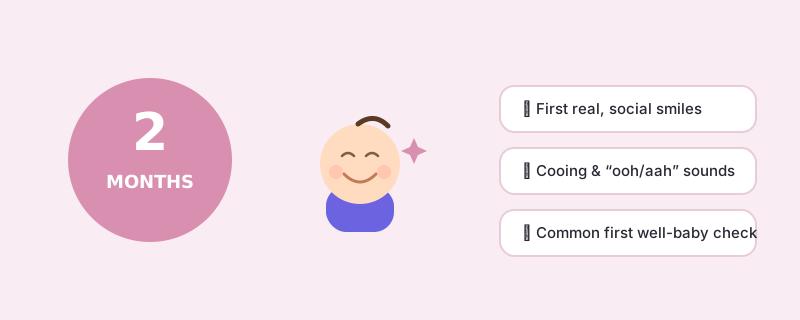
- Development
- First social smiles, cooing, and steadier tracking of faces and toys across the midline.
- Sleep
- Some babies begin to consolidate a little more sleep, though wide variation is completely normal.
- Checkups
- A common point for a first round of well-baby checks and immunizations.
Development
Two months is often when the exhaustion of the newborn weeks starts to earn its reward. Many babies produce their first real, social smile now — not the fleeting reflex smiles of sleep, but a deliberate grin aimed straight at your face in response to your voice or expression. Alongside it come the first cooing sounds: soft open vowels, the "ooh" and "aah" of very early conversation. When you answer those sounds with your own, you're teaching turn-taking long before any words arrive, and most babies will pause, watch your mouth, and "reply" in their own way.
Vision and attention are sharpening too. Around this age a baby can usually track a moving face or a bright toy smoothly across the midline, follow it up and down, and hold eye contact for longer stretches. Hands are being discovered — you may catch your baby staring at their own fingers or bringing fists loosely toward the middle. None of this runs on a strict timetable, so treat these as a general picture rather than a checklist. The most useful thing you can do is simply respond: face-to-face time, slow narration of what you're doing, and gentle back-and-forth "chats" give this budding sociability room to grow.
Sleep
Some two-month-olds begin to consolidate a little more sleep — a slightly longer first stretch at night, or naps that feel marginally more predictable. But this is one of the widest-varying parts of the whole stage, and plenty of babies are still waking frequently around the clock. If your baby is one of them, nothing is wrong; small bodies still need to feed often, and sleep patterns at this age are driven far more by biology than by anything you are or aren't doing.
The most helpful move is to keep the calm wind-down consistent rather than chase a schedule. A predictable, low-key sequence before sleep — dimmer light, a quieter voice, fewer stimulating toys as the awake window closes — gives your baby repeated, gentle cues about what comes next. Consistency, not perfection, is what quietly plants a rhythm over the coming weeks. Watching your baby's tired signals (going quiet, staring off, losing interest, early yawns) and offering sleep at the first of them tends to work far better than waiting for the clock.
Checkups & questions
Two months is a common point for a first substantial round of well-baby checks and, in many places, a first set of immunizations. It's worth treating the appointment as a two-way conversation: jot down anything on your mind about feeding, sleep, weight gain, or those new smiles and sounds, so nothing slips your memory in the room. Bringing a short written list is one of the simplest ways to get more out of a busy visit, and there are no silly questions where your baby is concerned.
After vaccines, some babies are a little more unsettled, sleepy, or fussy for a day or so, and a mild reaction at the injection site is common. What counts as expected versus worth a call varies, so this is exactly the kind of thing to ask your healthcare professional about in advance — they can tell you what's typical for your baby and what would warrant getting in touch. If at any point your baby seems genuinely unwell, is difficult to rouse, feeds very poorly, or you're simply worried, don't wait it out alone — contact your healthcare professional.
General guidance, for information only — not a substitute for professional medical advice. When in doubt, contact your healthcare professional.