 SmartHarmony AI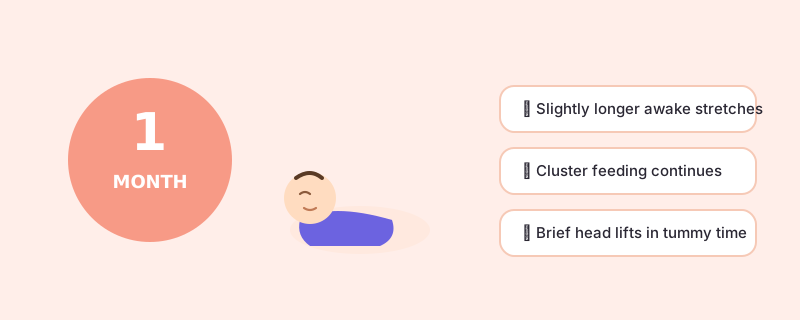
- Sleep
- Still irregular, with slightly longer awake stretches appearing.
- Feeding
- Frequent; cluster feeding continues; fussiness often builds toward ~6 weeks.
- Development
- Brief head lifts in tummy time; drawn to faces and voices.
By one month you're starting to read each other a little better, even though a predictable schedule is still a way off. The pace is much the same as those first weeks, but the fog often lifts a little as you both grow more confident and the days start to feel less like pure survival.
Sleep
Sleep is still irregular at one month, but you may start to notice slightly longer awake stretches and the occasional longer sleep. There's no schedule to chase yet — the body clock that eventually ties sleep to night-time is still developing — so the goal isn't a routine so much as gentle consistency. Repeating the same small wind-down before sleep (a dim room, a quiet voice, a familiar cuddle) begins to plant the seeds of a rhythm your baby will grow into over the coming months.
The most practical idea to lean on now is the wake window: the short stretch a baby can comfortably stay awake before becoming overtired. At this age those windows are very brief — often just a feed, a change, and a little cuddle before it's time to sleep again — and an overtired newborn is usually harder to settle, not easier. Watching for the early signs of tiredness (going quiet, staring off, losing interest, a first yawn) and offering sleep before the crying starts tends to make settling calmer for everyone. Our wake-windows guide goes into this in more depth.
Feeding
Feeds remain frequent, and cluster feeding — those bunched-together evening feeds — is still common. This continues to be a normal way for your baby to top up and comfort themselves, so try not to read it as a sign that your milk or your bottle-feeding is falling short. Feeding on cue still suits most babies, and the same reassuring day-to-day signs apply: steady wet and dirty diapers, a baby who settles between feeds, and weight gain your healthcare team is comfortable with.
Fussiness often builds toward around six weeks — sometimes described as a "peak of fussiness" — before easing again. A harder few weeks here, with more crying and more feeding for comfort, is a well-recognised phase and not a sign you're doing anything wrong. It can be genuinely draining, so it's worth planning small handovers and rest for yourself where you can. If feeding feels persistently off, if the crying seems different from usual, or if you're simply worried, keep an eye on diapers and lean on your healthcare team early rather than pushing through alone.
Development
During supervised tummy time your baby may begin to lift their head briefly — wobbly, brief, and hard-won, but a real early sign of growing neck and shoulder strength. Keep sessions short and while your baby is awake and content; a little protest is normal, and a minute or two several times a day does more good than one long stretch. As always, tummy time is for awake, watched moments only, never for sleep.
Socially, one-month-olds are increasingly drawn to faces and voices, and slow, exaggerated expressions held close to their face are compelling to them. Talking, singing, and simply narrating your day give your baby the language bath that early development thrives on, long before any words come back. You may catch fleeting moments of eye contact and, before long, the first hints of a social smile. Every baby moves through these steps on their own timeline, so follow the overall trend and mention anything that worries you to your healthcare professional.
General guidance, for information only — not a substitute for professional medical advice. When in doubt, contact your healthcare professional.