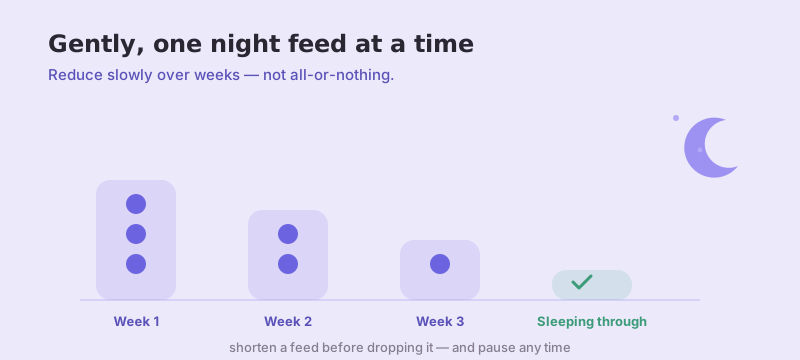
Night weaning is one of those steps that sounds bigger than it is. It doesn't have to happen all at once, on any particular timeline, or to any pattern but your own — and it works best when it's gentle, gradual, and led by what your baby is actually ready for.
What night weaning means
Night weaning simply means gradually reducing or stopping feeds during the night. It's not the same as sleep training, and it doesn't have to be all-or-nothing — many families drop one night feed at a time, over weeks, at a pace that suits everyone. Thinking of it as a slow taper rather than a single hard cut-off tends to make the whole thing calmer, for baby and for you.
When families consider it
There's no single right age. Families usually start thinking about it once a baby is older, growing well, and taking in enough during the day — and ideally after a word with your healthcare professional to check it's a reasonable step for your particular baby. Whether the timing and suitability are right for your child is exactly the kind of question worth raising with a professional who knows them.
Going gently
If you do decide to start, the theme is small changes over time rather than a sudden stop. A few things families find helpful:
- Make changes slowly — reduce the length or amount of a feed before dropping it entirely.
- Load the days with feeds and connection so nutrition and closeness aren't lost.
- Offer comfort in other ways at night — presence, a hand, a calm voice.
- Pick a calm week (not mid-cold, mid-travel, or mid-regression) to start.
Some waking continues for reasons other than hunger — habit, comfort, development, or a phase. Weaning the feed won't necessarily end the waking, and that's normal; the two are related but not the same.
A few honest notes
Go at a pace that feels right for both of you, and don't hesitate to pause. There's no prize for speed here, and stepping back for a week if things feel hard is a perfectly good decision rather than a setback. If your baby's growth, or your own instinct, gives you any pause, check in with a professional before continuing.

We write calm, plain-language articles about the early years, held to the same standard as the app: we describe patterns, never diagnose, and point you to your healthcare professional for anything clinical.
General guidance, for information only — not a substitute for professional medical advice. When in doubt, contact your healthcare professional.