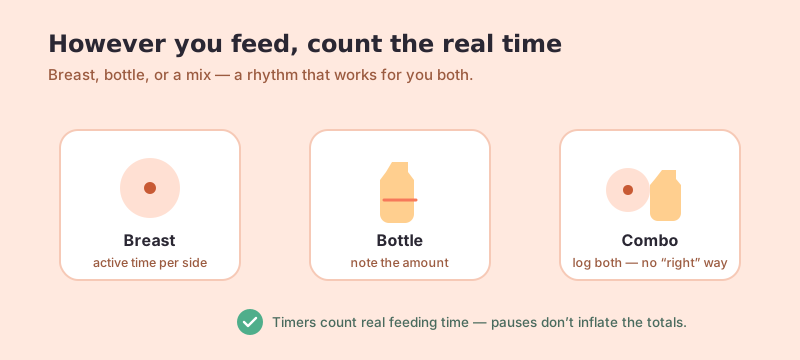
There is no single right way to feed a baby — only the way that works for your family. What almost every family shares in the early months is that feeds are frequent, unpredictable, and best led by the baby rather than the clock.
Feeding on demand
Feeding in the early months is frequent and often unpredictable, and that's exactly how it's meant to be. Whether you breastfeed, bottle-feed, or combine both, watching for hunger cues — rooting, hand-to-mouth, stirring, and only later crying — tends to work far better than a rigid clock. Responding early keeps feeds calmer for everyone, because a frantic, over-hungry baby is harder to latch and settle.
Newborn stomachs are tiny and breast milk digests quickly, so many small feeds around the clock are normal, not a sign of a problem. The frequency gradually eases as your baby grows and their stomach capacity increases — but in the first weeks, expect to feed a lot, day and night.
Breastfeeding: active time matters
Here's a detail most trackers get wrong: with breastfeeding, the active time at the breast matters more than total minutes, because babies pause, doze, and come back. Counting wall-clock time quietly over-states every feed — a 40-minute session with two long dozes might be 18 minutes of real nursing.
That gap matters when you're trying to work out whether feeding is on track, or comparing one day to the next. LittleRhythm's timer counts real nursing time per side for exactly this reason, and stays awake in the dark so it won't dim mid-feed — so your totals are honest rather than inflated.
Evening stretches of many short, back-to-back feeds are common, especially in the early weeks, and usually aren't a sign that your supply is low or anything is wrong. They often coincide with fussy evenings — tiring, but normal, and they tend to pass.
Bottles, pumping and combo feeding
With bottles, note the amount so you can see the day's picture; with pumping, track sessions and output; and if you combine methods, log both — there's no single "right" way to feed a baby. Paced bottle feeding (upright, frequent pauses, letting your baby set the speed) can make bottle feeds calmer and closer to the rhythm of nursing, and helps avoid overfeeding.
Combination feeding — some at the breast, some by bottle — is a completely legitimate choice, whether it's about supply, returning to work, or simply what suits your family. Logging both sides of it gives you the full daily total without any mental arithmetic at 3 a.m.
The signs it's going well
Day to day, steady wet and dirty diapers are one of the most reassuring signs that feeding is going well, alongside a baby who feeds, rouses, and has periods of settled alertness. Weight is followed at your check-ups; between visits, the diapers and your baby's behaviour tell you a lot.
Try not to judge feeding by any single feed or number — babies have hungry days and light days, growth spurts and quiet spells. The trend over a week is far more meaningful than any one session, which is exactly what a calm log is good at showing you.
When to get support
If you have concerns about supply, latch, painful feeding, or intake, an early chat with your healthcare professional or a feeding specialist is genuinely worthwhile — small adjustments early can make a big difference, and you don't have to work it out alone. Feeding is a skill you and your baby learn together, and asking for help is part of doing it well, not a sign you've failed at it.

We write calm, plain-language articles about the early years, held to the same standard as the app: we describe patterns, never diagnose, and point you to your healthcare professional for anything clinical.
General guidance, for information only — not a substitute for professional medical advice. When in doubt, contact your healthcare professional.